Common Symptoms in
FOXG1 Syndrome
FOXG1 syndrome is a rare neurodevelopmental disorder that can affect people in different ways and to varying degrees. While many people with FOXG1 syndrome share common features, not everyone experiences every symptom.
Common features may include developmental delay, difficulties with communication and movement, seizures, feeding and gastrointestinal difficulties, sleep problems, sensory sensitivities, vision problems and involuntary movements. Many people require significant support with everyday activities and may use mobility aids or wheelchairs.
As our understanding of FOXG1 syndrome continues to grow, researchers and families are identifying additional features that may be associated with the condition.
Below is a list of some of the symptoms and characteristics most commonly reported in people with FOXG1 syndrome.
Neurodevelopmental
- Severe or moderate developmental delay (little or no speech, limited motor skills)
- Intellectual disability
- Microcephaly (small head size), often developing after birth
- Low muscle tone (hypotonia) early on, sometimes progressing to stiffness or spasticity
Movement & Motor Control
- Abnormal involuntary movements (jerky, twisting, or writhing motions)
- Poor coordination and balance
- Limited ability to sit, stand, or walk independently
Seizures
- Epilepsy is very common
- Seizures often begin in infancy and can be difficult to control. (A few children have no seizures)
Feeding & Growth
- Feeding difficulties (poor sucking, swallowing issues)
- Gastroesophageal reflux
- Slow weight gain; some require feeding tubes
Behavior & Communication
- Minimal or absent speech (some individuals have some speech but nearly all will need speech, language and communication support)
- Limited eye contact in some individuals, cortical visual impairment.
- Features that can resemble autism spectrum disorder, though FOXG1 is distinct
Sleep & autonomic issues
- Severe sleep disturbances
- Episodes of unexplained crying or irritability
- Temperature regulation or breathing irregularities (in some cases)
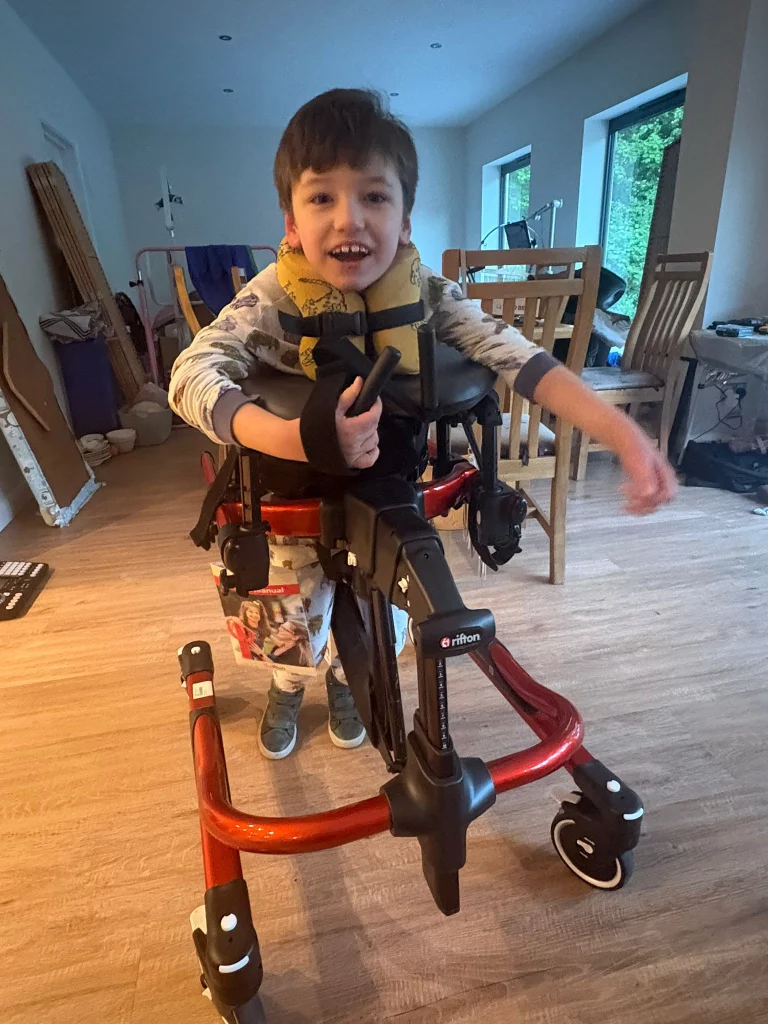
FOXG1 syndrome can affect each person differently. While there are features that are commonly associated with the condition, every individual is unique.
A recognisable FOXG1 appearance
Many children and adults with FOXG1 syndrome share a distinctive and recognisable appearance. Families often notice how similar people with FOXG1 can look to one another, sometimes appearing more like each other than like their own relatives.
There is also something very special about the way many children with FOXG1 present themselves to the world. Despite the significant challenges they face — and despite periods of discomfort, frustration and frequent crying — many have a naturally happy, gentle and engaging demeanour. Their smiles, expressions and individual personalities can shine through even when life is difficult.
Every person with FOXG1 is unique, but these familiar characteristics are something that families within the FOXG1 community often recognise in one another.