Money & Benefits
Disability Living Allowance for Children (DLA)
If you want to apply or learn more, the official guidance is available from GOV.UK DLA guidance.
Disability Living Allowance (DLA) for children is a UK benefit that helps with the extra costs of caring for a child under 16 who has a disability or health condition. It is not means-tested, and eligibility is based on the level of care and mobility support a child needs compared with other children of the same age.
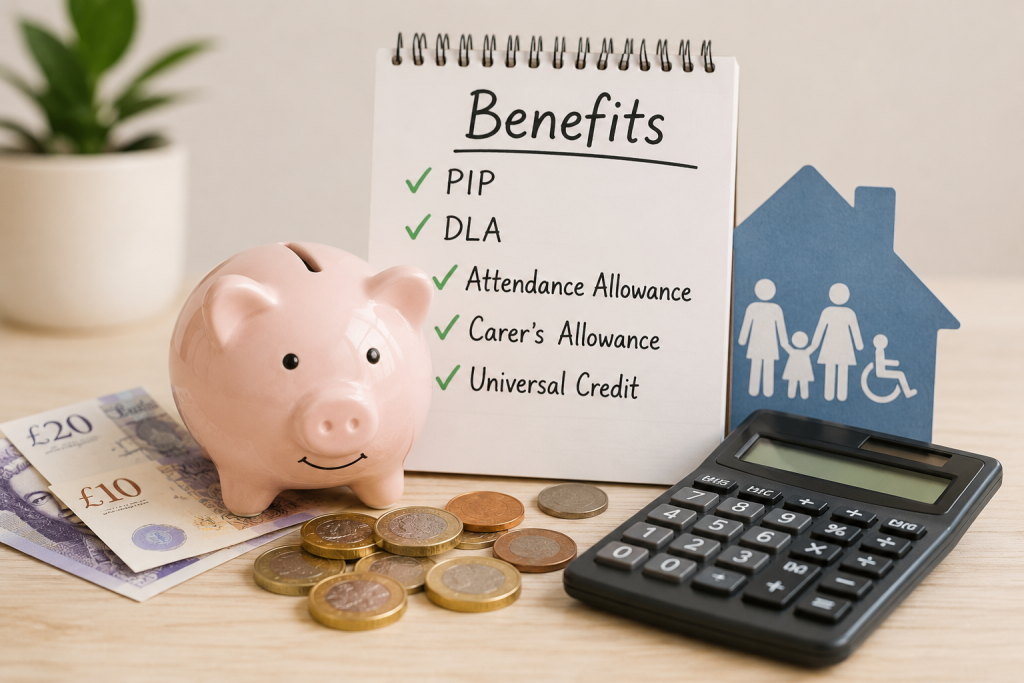
DLA has two components: Care and Mobility. Many children with FOXG1 syndrome may be eligible due to their additional care needs, mobility difficulties, and developmental challenges.
“Children receiving DLA will usually be invited to apply for Personal Independence Payment (PIP) when they approach their 16th birthday.”
Personal Independence Payments (PIP)
If you want to apply or learn more, the official guidance is available from GOV.UK PIP guidance.
Personal Independence Payment (PIP) is a UK benefit that helps people aged 16 and over with the extra costs associated with a long-term health condition or disability. PIP is not means-tested and can be claimed whether you are working or not.
PIP has two components: Daily Living, for help with everyday activities, and Mobility, for help with getting around. Eligibility is based on how a person’s condition affects their daily life and independence, rather than on a specific diagnosis. Many young people and adults with FOXG1 syndrome may be eligible for PIP when they reach the appropriate age.
Carers Allowance
If you want to apply or learn more, the official guidance is available from GOV.UK Carers Alowance Guidanceguidance.
Carer’s Allowance is a UK benefit for people who spend at least 35 hours a week caring for someone with a disability or health condition. The person being cared for must receive a qualifying disability benefit, such as Disability Living Allowance (DLA), Personal Independence Payment (PIP), or Attendance Allowance.
Carer’s Allowance can provide financial support to help recognise the important role of unpaid carers. Eligibility depends on factors including the amount of care provided, earnings, and immigration status.